Buddhist Funeral Service Singapore Explained (2026 Guide)
Losing a loved one is a deeply emotional experience. For Buddhist families in Singapore, funeral ceremonies are an important way to honor the deceased, offer prayers, and guide the soul toward peace and rebirth.
A Buddhist funeral service in Singapore focuses on compassion, mindfulness, chanting, and spiritual guidance. While traditions may vary depending on family practices and Buddhist traditions, the overall purpose remains the same — to provide a peaceful and respectful farewell.
This guide explains Buddhist funeral customs, chanting rituals, wake arrangements, and what families can expect during a Buddhist funeral service in Singapore.
What Is a Buddhist Funeral?
A Buddhist funeral is a religious ceremony based on Buddhist teachings about:
Impermanence of life
Karma
Rebirth
Compassion and mindfulness
The funeral is conducted to:
Pray for the peaceful transition of the deceased
Accumulate merits through prayers and good deeds
Offer comfort and spiritual support to family members
In Singapore, Buddhist funerals are commonly practiced among Chinese Buddhist families and may include traditions influenced by Mahayana Buddhism.
Where Are Buddhist Funerals Held in Singapore?
Buddhist funeral wakes are commonly held at:
HDB void decks
Funeral parlours
Private residences
The wake usually lasts several days, allowing family and friends to gather, pay respects, and participate in prayer ceremonies.
Buddhist Funeral Process in Singapore
While customs may differ between temples and families, Buddhist funerals in Singapore
generally follow a similar process.
1. Collection & Funeral Arrangements
After the passing:
The deceased is respectfully transferred
Funeral arrangements are coordinated
Necessary documentation and permits are handled
The funeral director also assists with:
Wake setup
Altar arrangement
Monk chanting coordination
Cremation or burial arrangements
2. Wake Setup & Buddhist Altar
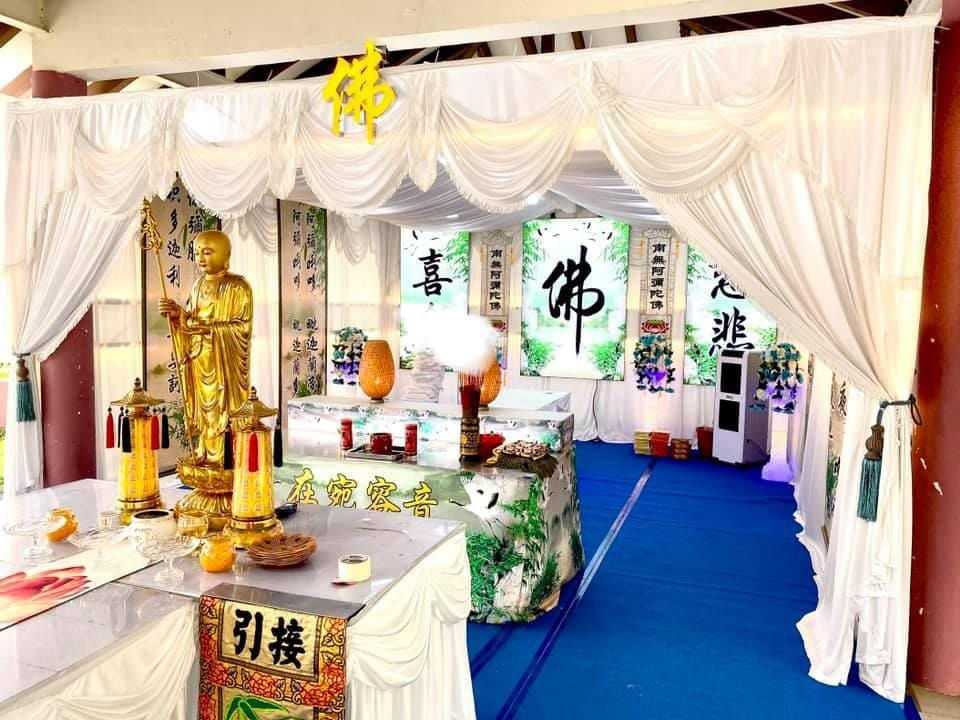
The wake area is prepared with traditional Buddhist elements, including:
A Buddhist altar
Image or statue of Buddha
Candles and incense
Floral offerings
Visitors may offer incense and prayers as a sign of respect for the departed.
3. Buddhist Chanting Ceremonies
One of the most important aspects of a Buddhist funeral is chanting by monks or Buddhist practitioners.
These chants are believed to:
Calm and guide the consciousness of the deceased
Generate merit for the departed
Bring peace and comfort to the family
Common Buddhist practices include:
Sutra chanting
Prayer recitations
Meditation sessions
Offering ceremonies
The Meaning of Merit in Buddhism
In Buddhist teachings, performing good deeds and prayers can generate merit for the deceased.
Families may participate in:
Chanting ceremonies
Charity donations
Vegetarian offerings
Acts of kindness dedicated to the departed
These acts are believed to support the spiritual journey of the deceased and cultivate compassion among surviving family members.
Cremation in Buddhist Funerals
Many Buddhist funerals in Singapore conclude with cremation.
Before the final farewell:
Monks may conduct final prayers
Family members may offer incense and respects
After cremation:
Ashes are collected respectfully
Families may place the urn in a columbarium
Memorial prayers may continue after the funeral
Post-Funeral Buddhist Rituals
Some Buddhist families continue remembrance ceremonies after the funeral.
Common practices include:
7th-day prayers
49-day chanting ceremonies
Memorial offerings at temples or home altars
These rituals are conducted to honor the deceased and continue dedicating merits through prayers and mindfulness.
Buddhist Funeral Etiquette
Guests attending a Buddhist funeral in Singapore are encouraged to observe respectful funeral etiquette.
Common practices include:
Wearing black, white, or muted colours
Speaking softly and respectfully
Offering incense if invited
Following guidance during chanting ceremonies
Families may also request vegetarian meals or offerings during the wake.
Differences Between Buddhist & Taoist Funerals
Buddhist and Taoist funerals are sometimes confused, but they differ in beliefs and rituals.
Buddhist funerals focus on:
Chanting sutras
Compassion and mindfulness
Karma and rebirth
Taoist funerals often involve:
Taoist priests and ceremonial rituals
Symbolic paper offerings
Traditional Taoist customs and prayers
Some families may incorporate elements from both traditions depending on personal beliefs.
Choosing a Buddhist Funeral Service in Singapore
Buddhist funerals require careful coordination of religious customs, chanting ceremonies, and wake arrangements. Working with an experienced funeral provider helps families navigate the process with peace of mind.
At Yi Ming One Stop Funeral Services, we provide compassionate and respectful Buddhist funeral arrangements while guiding families through every step with care and professionalism.
✔ Buddhist funeral coordination
✔ Chanting and ceremonial arrangements
✔ 24/7 immediate assistance
📞 Speak to us anytime for support and guidance
FAQ: Buddhist Funeral Service Singapore
How long does a Buddhist funeral last?
Buddhist funeral wakes in Singapore commonly last several days depending on family traditions and arrangements.
Are Buddhist funeral chants important?
Yes. Chanting ceremonies are believed to guide the deceased peacefully and generate merit through prayers.
Can Buddhist funerals be held at HDB void decks?
Yes. Many Buddhist funeral wakes in Singapore are conducted at HDB void decks or funeral parlours.
Final Thoughts
A Buddhist funeral service is a meaningful and compassionate farewell centered on prayer, mindfulness, and spiritual guidance.
Understanding Buddhist funeral customs helps families honor their loved ones respectfully while preserving important religious traditions during a difficult time.


Comments